Tuesday, August 01, 2006

BlogHer Conference 2006: Look in the Mirror and Lead!

Here is some good news for a change, and it is of special importance to women bloggers around the globe from emerging countries*1. There is a lot of good stuff here for guys too if you are smart enough to be able to keep pace with the fast-moving women and girls of the world.

While researching news and blog posts today on the historic election in the Democratic Republic of Congo I came across a “Heads Up” post at the Blogpulse Newswire blog about the BlogHer Conference 2006 in San Francisco. BlogHer is an online network of over 4100 women bloggers co-founded by three American business professionals Lisa Stone of Surfette, Jory Des Jardins, and Elisa Camahort. The purpose of the network is to help “… create opportunities for women bloggers to pursue exposure, education, and community.” (More about BlogHer mission and vision and the BlogHer co-founder biographies)

This year’s conference in San Francisco had attendees from around the world, and even I received an invite back in the Spring of this year but unfortunately could not attend (O.K., I admit that I was a bit Chicken to be around all of those top female bloggers but I plan to go next year
. Really!). Professional journalist and tech writer Chris Nolan of Spot-On.com was the moderator at the closing keynote address and she conducted interviews with some of the rising stars of new media and new media technology: Arianna Huffington of The Huffington Post, Caroline Little of State of Grace, Mena Trott of Six Apart (creators of Typepad & Movable Type), and Grace Davis of SFGate.com. Also have a look at the BlogHer Conference 2006 list of corporate sponsors.

I can remember writing to my friend Sokari of the Black Looks blog and the newly launched African Women Reblog some months ago that I thought it would be a great idea if she and more African women bloggers looked into capitalizing from their work online. In other words, making money from their excellent writing and multimedia content creation (photos, video). It appears that many of the women bloggers attending the BlogHer Conference 2006 have mastered the art of blogging for dollars and having fun while you are doing it. Here is an excerpt from Lisa Stone’s post "Look in the Mirror and Lead" along with other posts and resources from the conference and a related article at the Wall Street Journal:

"In the past year, each of these women has leveraged Web-based technologies to pursue their professional agendas and triumphed -- while experiencing with unrelenting public pressure and excoriating personal criticism. If success is the best revenge, revenge must be sweet indeed for this quartet. For today, each of these women enjoys kudos from their readers/users (even critics), while at the same time being able to point to cold, hard facts such as Web traffic and revenue that demonstrate their ideas were worth pursuing.


How'd they do it? Nolan's skillful interviews Saturday evening revealed four very different women whose core message was remarkably the same: Look in the mirror and lead."


· "Instead of waiting for the white knight to come and save us, we need to find the leader in the mirror and act on those skills fearlessly." - Arianna Huffington

· "I've always had my pilot light on. Sometimes I don't pay attention to it but it's there. In responding to Katrina, I didn't even think about the obstacles. I just thought that I should be there helping somehow." - Grace Davis

· "You either fly with it (change) or you don't ever get on the boat. And I think you get on the boat." - Caroline Little

· "I've followed my gut and my passion...I 've seen so many people driven by title. As soon as you know someone cares more about title than the product, it really shows." - Mena Trott


BlogHer Conference 2006 blog posts, articles, and resources

Look in the Mirror and Lead by Lisa Stone
(BlogHer Conference 2006 Keynote Address)

The Wall Street Journals Who’s Who in New Media by Marianne Richmond

Blogher '06 Session Discussion: Audience Building and $$$ Generation on Day One BlogHer

More BlogHer ’06 Session Discussions, Panels, and Speakers

BlogHer Network Blogroll – blogs by women (and sometimes men too)


Note*1: BlogHer is looking for contributing editors and members from developing countries, especially editors from the African continent. Get in touch with Lisa Stone if you are interested in joining their team.

Technorati tags:

Thursday, July 20, 2006

Middle East: The Israel-Lebanon-Palestine Summer of War

Well, it didn’t take long for the world to come down from the euphoria of watching 32 nations compete in a friendly international sports competition (the FIFA World Cup 2006) into the brutality, carnage, fear, and hatred of war in the Middle East. I couldn’t have planned it better myself if I were the devil incarnate.

Splashed across TV screens around the world are Breaking News headlines about death and destruction raining down on the heads of innocent civilians, women, and children in Israel and Lebanon and Gaza. The daily carnage of sectarian violence and revenge killings and atrocities carried out by madmen operating in Iraqi cities has dropped to 2nd and 3rd position in daily TV news broadcasts and pushed back from the world’s press headlines.

The world’s bloggers immediately picked up on this outbreak of war and are jockeying for audiences around the globe right alongside many professional news reporters and news commentators for the major media networks. CNN International and newspapers i.e. the Times Online and the Washington Post online are giving valuable TV airtime and press coverage to the world’s bloggers. Bloggers are covering this worsening conflict minute-by-minute from the Israeli and Lebanese frontlines and cellars, evacuation LZ’s and ports, and hot zones where even the seasoned war reporters don’t have access or are afraid to tread (insurance problems).

While open warfare rages from Gaza to Haifa to Tyre to Beirut, Hezbollah and Hamas fighters are nowhere to be seen as they hunker down in underground bunkers and tunnels and/or crouch in dark alleyways well out of sight of Israeli airborne reconnaissance and fighter jets, and (surprisingly) out of sight of the camera lenses and microphones of international TV news teams. *1


Correction 1: CNN’s Nick Robinson found a Hezbollah press spokesman for a guided tour of the destruction in Beirut’s southern neighborhoods. Here is the link to the CNN video stream “Hezbollah - We will not surrender “(4:46).

The greatest destruction of lives and infrastructure that Lebanon has seen since the civil wars of 1975-1990, the Israeli invasion of southern Lebanon in 1978, and the Lebanon War of 1982 is taking place (again) LIVE before the eyes of the world. The deepest penetration of Israeli airspace and territory by rockets fired by the radical Islamic militias Hezbollah and Hamas are causing fear and destruction in several Israeli cities, towns and villages. The largest evacuation of civilians and foreign nationals from a war zone in the Mediterranean since WWII is playing out on television and PC screens around the globe, all at an enormous expense of human nerves and effort, military and civilian logistical support, and money. *2-2b

Correction 2: the U.S. government is charging its citizens and residents for evacuation services from Beirut.
Correction 2a: U.S. taxpayers are footing the evacuation bill after all.
Correction 2b: Sh--! The U.S. Marines have landed in Beirut for the first time in 22 years in order to evacuate American citizens. Will they be invited to stay on to help others?

World leaders from the most prosperous nations and the most promising developing countries in attendance at the 2006 G8 Summit in Saint Petersburg, Russia have again been knocked off-balance and off-track from the important affairs and needs of the world community listed on their agendas. Same thing happened at the 2005 G8 Summit in Gleneagles, Scotland when homegrown Jihad wannabes decided to attack the people of London and Britain on July 7th.

UN, EU and other government officials are running around like their hair’s on fire with dumb looks on their faces, the Arab League Secretary-General Amr Moussa has declared that “…the Middle East Peace Process is dead!” President G.W. Bush has been overheard (accidentally) using shocking cuss words in a private conversation with the U.K. Prime Minister Tony Blair about what U.N. Secretary-General Kofi Annan needs to bluntly tell the President of Syria, Bashar al-Assad, to “Cut the Crap”. In other words, we have another Middle East SNAFU here.

It appears that the Middle East is dragging the world deeper into the abyss of all out war while people responsible for this incredible mess over the past several decades continue to run around blaming one another and pointing fingers at everyone and everything other than themselves. Israel and the U.S.A. of course stand right at the top of the List of Blame & Shame in the minds of many people caught up in this conflict, and a helluva lot of people who are a million miles away from the place. However EU leaders, Russia, and even some Arab countries’ leaders are pointing the finger squarely at Hezbollah for igniting the massive Israeli military response. World leaders are bitterly divided over whether Israel’s invasion of Lebanon and the bombardment of Lebanese towns and cities isn’t a bit “over the top”. Lot’s of people are (openly) supporting the rocket attacks and suicide bomb attacks against Israeli cities and towns by Hezbollah and Hamas.

One thing is for certain, children and sensible people young and old, black and white and brown and yellow, Jew and Muslim and Gentile and Hindu and Buddhist, the world over, WANT THIS VIOLENCE TO STOP ASAP.

Many of us older folks around the world have been watching this madness from the sidelines for years. Nothing has changed, and very little will change until a whole lot of people over in the Middle East get their collective shit together real soon. It is clear that leaders from “the West” cannot fix these problems and it is also clear that leaders in the Middle East are either incapable of fixing these problems or unwilling to do so. Personally, I am sick of it, and I know that I am not alone in my feelings as billions of people outside of the region are becoming numb and indifferent to the perpetual Crisis in the Middle East. It is the longest-running Carnival of Hopelessness and Death and Despair on Earth. And therein lies the danger for every citizen and resident of the Middle East, that the rest of the world will stop caring about what happens there.

These long-running conflicts are depressing, psychologically disturbing for kids and grownups everywhere, very costly in human lives and economic terms, and they kill the opportunities for a better life for people all across the globe. Millions and millions of people are facing problems that are the same and many times are even worse problems than those of the suffering masses of the Middle East.

The death and destruction and hatred resulting from wars suck life out of the whole world just like a wildfire sucks oxygen from the sky. Every living thing in its path is burned and dies or is permanently damaged, and you have to wait a damned long time before any sustainable life sprouts anew from soil that has been ruined by centuries of fear and hatred and religious fanaticism and social neglect. Perhaps a new generation of Arabs and Israelis and Persians, Jews and Muslims and Gentiles, will succeed where so many generations have failed so miserably for so long. My own generation of world leaders and common people have failed you the people of the Middle East, and we should all bow our heads in shame.


Here are updates from the frontlines that may help you to better understand problems that the best minds of the world have failed to solve for generations:


The Head Heeb
House of Cards (July 14, 2006)
A Clash of Authority (July 12, 2006)
Why International Law Matters (July 17, 2006)

Global Voices Online - Voices from the War Zone

This week in Israel: War?! edited by Lisa N. Goldman
Middle East and North Africa – Israel archives

Middle East and North Africa - Lebanon archives
Lebanon: Collective Punishment & Death or Total Submission edited by Moussa Bachir

Israel Condemnation and the Cause of War and Conflicts edited by A. Fatih Syuhud
This Week in Palestinian Blogs: The Vocabulary of War edited by Nareem Tarawnah

Council on Foreign Relations (CFR and Foreign Affairs Magazine)
Syria, Iran and the Middle East Conflict – July 18, 2006

Power and Interest News Report (PINR)
The Role of Syria and Iran in the Israel-Lebanon Crisis – July 20, 2006


The Washington Post
The Guns of July - July 19, 2006
Lebanon: The Only Exit Strategy – July 19, 2006
Hunker Down with History – July 18, 2006
War Takes Lebanon Back to the Civil War Days – July 17, 2006
A War with Extremists – July 18, 2006
German Spies Have Record of Dealing with Hezbollah – July 20, 2006

The Jerusalem Post
Iran, Syria watch comfortably from the sidelines – July 19, 2006
We’ll cooperate with the international community – July 19, 2006

CNN International
Westerners flee Lebanon any way they can – July 18, 2006
Middle East News Updates

BBC News
Lebanon condemns Israel madness – July 18, 2006
In Depth – Middle East Crisis

The Times Online Newsdesk blog
World Comment: How does it end? – July 19, 2006
When booms and whooshes become an obsession – July 17, 2006

Der Spiegel International (English edition)
Israel’s costs and Rewards – July 17, 2006
Israel considers invasion as Hezbollah rejects ceasefire – July 18, 2006
America and Iran – Opening a second front – July 18, 2006

Technorati tags:

Monday, July 10, 2006

World Cup 2006: Some final thoughts on the Finale

Now that the FIFA World Cup 2006 has come to such a dramatic close, soccer fans around the globe should get back to work and stop finding excuses about why we cannot function like normal human beings. Congratulations to the Azzuri (Italian National Football Team) for winning this world championship for the fourth time since 1934 (1934, 1938, 1982, 2006). 1938! Was Benito Mussolini there at the ’38 World Cup along with his good buddy Adolf?

Which reminds me, Germany’s Der Speigel has a good article about the issue of race and professional football in Europe titled “FIFA’s Anti-Racism Campaign: Talking Race in Hitler’s Stadium”. The Globalist online has an equally important article about the positive impact that the FIFA World Cup 2006 may have on race relations for the people of the South American Andes, “Dateline Ecuador: Soccer and Racial Justice”.

A big congratulations to the French National Team (Les Bleus) and their devoted fans for putting up such a great fight for the title, despite the “head butt” incident between France’s team captain Zinédine Zidane and Italy’s Marco Matterazzi in the final minutes of overtime play. As described in this Sports Illustrated (AP) article about the final match, “the beautiful game turned vicious, even venomous on Sunday.” I mean what was on Zizou’s mind to make him flip out like that toward the end of such an important match? What did Italy’s Marco Matterazzi say to Zinédine Zidane to make him so angry? Does any one know?

I can understand Zidane if a very serious insult was made by Matterazzi as I almost “lost it” twice myself at one of Germany’s World Cup 2006 Fan Fests. Oft times it is best to just walk away from an idiot vs. “sending him to the deck “, albeit I sometimes prefer the latter solution. Violence is simply not recommended behavior before an audience of billions of sports fans… and especially not in front of the kids around the world who were watching. Next time Zizou, just throw one of those Les Bleus French fighting cocks at the perpetrator, the bird will take care of the rest. Guaranteed. You won’t get a Red Card but the rooster may be thrown out of the game for good.

I think from the point-of-view of football fans the world over Germany deserves the biggest congratulations at this World Cup 2006. I know that it is my job to keep constant pressure on “the Germans”, but sometimes you just have to give credit where credit is due. Germany, you did an excellent job of being host to the world for the biggest sporting event this side of the Olympics. The German team could have just as well been in the finals due to their excellent and consistent play under the brilliant leadership of coach Jürgen Klinsmann. Your team was great, the organization and execution of the events was great, German fans and revelers and the many Fan Fests were outstanding, it was overall a big success.

It has been a very long time since I have seen so many people in Germany being so jubilant and happy, perhaps not since the fall of the Berlin Wall back in 1989. Don’t lose what you have gained through this experience, because as you can plainly see, the world really likes you. Weiter so Deutschalnd, weiter machen. See you down in South Africa for the World Cup 2010. That will be a football event and outrageous party for millions that the world will never forget, even if this Der Spiegel journalist can only see Schwarz.

While I’m on the subject of Germany and the Germans, let’s have a closer look at what’s up with… (to be continued).


Sports Illustrated
Italy wins shootout with France in Cup Final


The Bitter End (Mark Bechtel analyzes Zidane’s blunder for the SI World Cup 2006 blog readers – 350+ comments and counting…)

Out of their league (Luis Bueno on why a CONCAF nation may never win the World Cup Championship. This is total BS, but it is well written BS. America can win the World Cup someday! Can’t we???)

Spiegel International Online
(English language edition of the popular German news magazine)
Moment of Madness Wrecks Zidane’s Fairy Tale
Feeling Bleu: Paris Mourns World Cup Loss
World Cup 2010: Fan Fests in the Townships

Washington Post
Frances Zidane Sees Red, Ends Fabled Career with an Ejection
Curtain Falls on Zidane Years in Traumatic Fashion

The Globalist
Dateline Ecuador: Soccer and Racial Justice by Raul Gangotena


Additional Online Resources about the World Cup 2006

Sports Illustrated FIFA World Cup 2006 special
SI World Cup official blog (home)

ESPN SoccerNet – FIFA World Cup 2006
ESPN Podcast Center – World Cup 2006 podcasts


Spiegel Online World Cup 2006 Special


Technorati Tags:

Friday, June 16, 2006

World Cup 2006: This is NOT just a game!

Moving into Day 8 of the FIFA World Cup 2006 the excitement surrounding this truly global sporting event continues to build. Wednesday night after the German team defeated Poland by the skin of their teeth (1-0 in overtime) the celebrations in the streets here were some of the biggest and happiest I have ever witnessed. My favorite team in this year’s competition is Ecuador who has delivered some of the best and most exciting play of the tournament so far. Ecuador is very likely to beat or tie Germany in the final Group A match on Tuesday June 20th. This would be equivalent to a national disaster for German sports writers, radio and TV sports commentators, and the fans. The German team has some great players and Germany coach Jürgen Klingsman is one of the best in the business, but the team has NOT been playing at a championship level in their first two matches. The Ecuador team on the other hand has proven to soccer fans from around the world that they have come to Germany to play some serious ball. Period. It doesn’t matter who wins next Tuesday’s match since both teams have qualified to go through to the next round to face either England or Sweden.

The embarrassing defeat handed to the U.S.A. squad by the top notch Czech Republic team last Monday was painful and I have had to take the obligatory America-bashing and (un)informed commentary about the lack of professional skills and interest in soccer in the United States all week from friends and colleagues and even strangers on the street. It’s gotten so bad that just the other day a stray (German) dog tried to pee on my leg just to show his disdain and disapproval for the U.S. team’s poor performance. He missed. Therefore I’ve added some additional links below to sites that focus on the U.S. sports news coverage of the World Cup 2006. This is for my readers who are interested in knowing the facts vs. the opinion of the average dumb—s expert on U.S. soccer I have to put up with here in Good Old Europe on a regular basis.

By the way, the American women soccer fans outnumbered the guys by at least 3-1 in the pub at the opener against the Czechs. Of course “the Boyz” put on a big comedy show to keep the girls laughing and upbeat at what would have otherwise been an evening of pure misery. The handful of Czech and German fans in attendance loved the show too, albeit they probably didn’t understand how we were losing the game and still having great fun. Crazy Americans.

There has been some outstanding coverage of the World Cup 2006 in the blogosphere and I am surprised how extensive media sites such as Sports Illustrated and ESPN have adopted blogs for their readers and soccer fans from around the globe. Speaking of globe,
Global Voices published a post just yesterday about the cool blend of Hip-Hop and World Cup Soccer over at the Soul on Ice blog. BBC News online today highlights African bloggers writing about the competition in the article “Blogging Africa’s World Cup”. Just in time for tonights hot matches between Holland vs. Ivory Coast and Mexico vs. Angola. It looks as if Argentina has sent Serbia-Montenegro packing at the time of this writing with a 6-0 shellacking. Wow! Gotta go. My beer is getting warm.

P.S. Regarding the title of this post, I stole it from an ESPN advertisement over at the Sports Illustrated website. I thought it was pretty cool so here is the text of that ad as best as I can remember:

This is NOT just a game.
This is about honor, glory, passion.
THIS is the World Cup!

One game changes everything.
It close the shops.
Closes the schools.
Closes a city.
Fuels a nation.
Breaks the borders.
Builds a hero.
Stops a war.
Crushes a dream.
Answers a prayer.

Amen, Brother. (I added this line)


Sports Illustrated FIFA World Cup 2006 special
SI World Cup official blog
SI Writers – Grant Wahl, Richard Deitsch,
SI Blog post:
Can the U.S. defeat Italy?

ESPN SoccerNet – FIFA World Cup 2006
ESPN Podcast Center – World Cup 2006 podcasts

Technorati tags:

Friday, June 09, 2006

World Cup 2006: Die Welt zu Gast bei Freunden

It is less than 1 hour to the opening kickoff of the World Cup 2006 and after a long 4-year buildup it is finally Partytime in Deutschland. I have already reserved my favorite Stammtisch (VIP table at the local pub), work is finished for the day, and all I can think about is that first long pull from a cool and refreshing German pilsner at 1800 hours tonight. The opening game is between the host nation Germany and Costa Rica and being from the “Colonies” myself I am definitely rootin’ for the boys from the Americas. There could be trouble at the local pub tonight surrounded by all of those fanatic, nervous German fans, but I’m ready. Remember the Alamo, Mexico!

As you can imagine the Stimmung (mood) is one of very high excitement all over the country and it is great to see the German people castoff their typical terrible habit of complaining about every damn thing under the sun and give some real meaning to the phrase Willkommen in Deutschland (Welcome to Germany). I must say that the German people have outdone themselves in working so hard to make this World Cup event a success and enjoyable for everyone, so the world will be looking forward to the next four weeks of Football Fever with excellent and fair play on the field and off.

The hometown team (U.S.A. Men’s National Team) faces the formidable Czech Republic on Monday night (6/12/06) and then they play the Italian team (6/17/06) followed by a match with Ghana (6/22/06). It’s an uphill battle for my favorite team but I figure if Bruce Arena can lead the U.S. Boyz to victory in the very tough Group E then it will be a breeze all the way to the quarterfinals and perhaps on to the (God forbid) championship match. The U.S. Men’s National Team is often the butt of jokes and teasing over here in Europe (and amongst my African buddies) but I remain a diehard fan and will fight for them in the pub and on the streets (Bring 'em on!) while they take care of business on the football pitch. The U.S. Team by the way is rated Number 5 out of the 32 teams qualified for the World Cup this year. As the great Brazilian champion footballer Pelé was saying the other night, “Anything is possible at the World Cup!” More about this great sporting event later, I think that my lovely little Geman Pils may be getting a bit too warm down at the Kneipe (pub).

Good Luck at the World Cup 2006 to all of my readers who are avid football fans. May the best team win and hoping that you have a great time at the biggest party on the planet whether you are here in Germany or at home in the World with family and friends.

Der Spiegel World Cup 2006 Special (English)
Der Spiegel’s World Cup 2006 Germany Survival Bible (English)
German government official World Cup 2006 website (multilingual)


U.S. Soccer official website, blog, and daily podcasts (Americanisch)

BBC News World Cup 2006 Special (The Queen's English)

Technorati tags:

Friday, June 02, 2006

CNN Exclusive: DR Congo President Joseph Kabila interviewed about mass rapes in the Kivus

CNNI Africa correspondent Jeff Koinange has scooped a rare interview with the Democratic Republic of Congo President Joseph Kabila. The video footage is airing today in Europe as a follow-up to the riveting report by Koinange on May 26th about the mass rape victims of Bukavu and other eastern DRC cities, towns, and villages. Femi Oke of the CNN Inside Africa program will hopefully air this report again this weekend. As I am writing this post the CNN Website team has finally published the story with video file to the Web:

Congo president on military rapes: ‘Unforgivable’ – CNN May 31, 2006

During the interview Jeff (we’re on a first name basis) visits President Kabila at his compound in Lubumbasha and shows him the video footage from the May 26th CNN broadcast. Sitting at an outdoor garden table with Jeff’s Apple notebook computer in front of him President Kabila displays a look of shock and disgust as he views the testimony of a 15 year old boy who was gang-raped by soldiers that had first killed both of his parents, then raped his two young sisters to death, before starting in on him for hours or days. The boy says that he was sodomized by at least 20 uniformed soldiers who had told him when they seized him and tore off his clothing that his “sisters had not satisfied them”. This youngster was only 12 years old at the time of his rape. The surgery and medical care needed to restore the young man back to health took more than 6 months. He is presently living in the temporary custody of a local minister and the women of his community. This unfortunate young man is now psychologically scarred for life because of this senseless brutality.

Koinange asked the young president about how he feels after viewing this report and President Joseph Kabila replied after a long pause, “Shocked!” President Kabila was then asked what he would do if such acts were carried out against his own twin sister, mother, or six-year old daughter and he replied, “You already know the answer to that [question].” Kabila went on to say that over 300 soldiers of the Congolese Armed Forces and rebel militias had already been prosecuted for such crimes in the DRC, in stark contrast to various reports by human rights groups i.e. Amnesty International (Congo report 2005, AI DRC report library) and separate investigations by the United Nations and MONUC.

President Kabila, who served under his late father Laurent Désiré Kabila as a military commander in the two Congo Civil Wars and later went for advanced military studies to the People’s Republic of China’s National Defense University (there’s that China-Africa Win-Win policy again) also stated in the CNN interview:


"It's shameful that soldiers anywhere are allowed to do such things," he said. "That's why I want to be president. I want to change this. I want to make security one of my first priorities so that these and other acts come to an end once and for all."


I can only say, “So do we the people of the world, Mr. President. We demand that you do everything possible to bring an end to this indescribable violence against innocent women and children in your country. Just let us know how we can best help you. Keep on talking with us.”

Below are links to additional information about the crisis in the eastern DR Congo provinces of North Kivu and South Kivu. Pay particular attention to CNN correspondent Anderson Cooper’s blog report on the victims of mass rape being treated at Panzi Hospital in Bukavu and please note the special work being done by the Goma Film Project where our friend and fellow blogger Louis Ableman has devoted so much time and energy to help the victims of mass rape in Goma.

CNN’s Anderson Cooper 360° blog
Gang raped and mutilated but still praising God – May 25, 2006


CNN International
Rape, brutality ignored to aid Congo peace – CNN May 26, 2006
Congo president on military rapes: ‘Unforgivable’ – CNN May 31, 2006
CNN Inside Africa program with host Femi Oke

Wikipedia, the free encyclopedia
Democratic Republic of Congo
Kinshasa

Relief Web Maps of the DR Congo: (see maps)


Contact DR Congo President Joseph Kabila at his official website and let him know that you read this post and saw him on the web and on CNN and that we are all hopping mad about what’s going down in the eastern DR Congo. And while you’re at it, ask him to get some English language pages up on his website. After all, his English skills were very good today on CNN. Indeed.


Technorati Tags:

Thursday, June 01, 2006

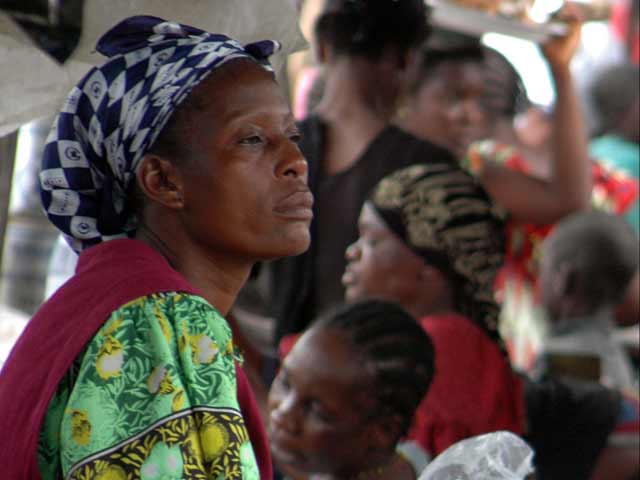
Kinshasa, DRC: Women at marketplace in December


Women and children at a Kinshasa market
Democratic Republic of Congo - December 2005
Photo by M. Asmani - MONUC.org

TIME: Congo - The Hidden Toll of the World's Deadliest War


TIME Magazine Cover - June 05, 2006 issue
Photo copyright: TIME Inc.


See the related post On the Mississippi with Visitors from Kinshasa for more information.

Wednesday, May 31, 2006

Germany: On the Mississippi with visitors from Kinshasa, DR Congo

While the world’s attention is focusing on Germany for the start of the Beautiful Game Championship (World Cup 2006) only 8 days away, my attention is focused on another beauty here in Germany today. This beauty is from the Democratic Republic of Congo and her name is Mama Emily. This post to Jewels in the Jungle is dedicated to her and all the mothers and grandmothers of her country who have survived years of turmoil and neglect to see a better day.


The TIME magazine cover story for the June 5, 2006 issue is a feature about the Democratic Republic of Congo titled “The Deadliest War in the World” written by Simon Robinson and Vivian Walt. The report is about the simmering conflicts and continuing atrocities and suffering of people in the eastern provinces of this vast African country that is larger than Western Europe. CNN published a summary of the TIME article on May 28th along with related features on the DRC. There has been some light coverage of the story in the blogosphere and on the Web. The TIME Magazine cover story attempts to illustrate the many dangers and complicated issues facing the people of the DR Congo before their scheduled July 30th national elections, the 1st democratic elections to be held in this country in over 40 years.

On May 24th CNN’s Jeff Koinange reported on the 1000’s of brutal rape victims being treated at the Panzi Hospital in Bukavu, a major city in the war torn eastern DRC province of South Kivu. The CNN article and video report is very disturbing as it draws attention to the plight of desperate women and children suffering at the hands of the most savage and senseless brutality against human beings imaginable. Louis Ableman of the Goma Film Project and his team have just completed the feature documentary LUMO, a film about women and girls in Goma who are the victims of thousands of incidents of sexual violence and murder carried out by various militia groups and soldiers operating in the eastern DRC province of North Kivu. Martin Bell, a former BBC News correspondent and presently UNICEF Ambassador for Humanitarian Affairs, did a feature report back in April 2006 for BBC Two Newsnight titled “No Peace for the DR Congo”.
But today I want to focus on the positive side of the DRC and move away from all of the clichés i.e. the Heart of Darkness. This is one of those all too rare stories you can read online about people from the DR Congo that has a happy ending.

Three or four years ago I had the privilege to meet and befriend a woman from Kinshasa, DRC (Democratic Republic of Congo) who lives in my neighborhood. Her name is Dédé (pronounced Day-Day) and she has been living in Germany for about 20 years. She is the mother of two lovely grownup daughters and is also the grandmother of my little friend Vanessa who has just begun school this year. Three generations of Congolese and Congolese-Europeans under one roof, all female, is a special experience all by itself. Dédé has been a treasured friend and an incredible reservoir of knowledge about life and customs in central Africa.

Some months before I met Dédé I had been researching information and news online about the DRC, so I was jubilant to have someone from the country to speak with about what’s going on down there, about the history of the country and the customs of various people who live there, about life under the longtime ruler of the country
Mobuto Sese Seko, and of course about the Congo civil wars (I and II) that have contributed to the deaths of over 4 million Congolese to date.

Until the time we first met Dédé had only one friend from the U.S.A. and I had never had a friend from the DR Congo. We are able to converse and argue about everything under the sun: global and regional politics, the War in Iraq, religion, history and culture in the Americas and in sub-Saharan Africa, our personal life stories and stories about our families, you name it. Dédé believes that Americans (N.A. & S.A.) are crazy and a very curious people. I have been able to convince her that some people back in the U.S.A. know a little something about Africa and the DR Congo. Of course she realizes that people from around the world care deeply about what is happening in her country even as we remain confused, angry, and frustrated about what we can personally do to help.

My friend grew up in
Kinshasa under the regime of the late President Mobutu. Her father worked for many years as a civil servant in the DRC since the 1960’s, so the family did not live under the extreme poverty and deprivation we so often see today as the plight of the majority of people living in Kinshasa and all across the vast country. Dédé’s mother and father hail from Province du Bas-Congo (see maps) in the southwest corner of the country where the mighty Congo River empties into the Atlantic Ocean. All six children in the family received a good education in Kinshasa right through secondary school and some were able to continue their studies in Europe. Dédé has told me some very interesting and many times funny stories about life under Mobutu in and around Kinshasa, and I’ve been told some very sad and harrowing tales about the Congo’s descent into war and chaos in 1996 as Laurent Désiré Kabila with the backing of Rwanda, Uganda, and Burundi mounted a full-scale rebellion against Mobutu Sese Seko.

By May 1997 Laurent Kabila had seized the capital city of Kinshasa with various rebel militia groups and rebel Zairean Armed Forces members united under the ADFL. This march of death and destruction swept across the length and breadth of the nation, having begun in the volatile eastern province of South Kivu thousands of kilometers away from the capital. Dédé understands firsthand what it is like to be at the business end of an automatic weapon aimed at your head while marauding militias and armies are sacking a city and threatening to rape and kill you and your family. Fortunately she and her family members escaped such terror unharmed while she was visiting Kinshasa before the start of the 2nd Congo War.

What makes the TIME magazine article so relevant for me today is that after anxiously waiting for almost 8 years Dédé has family visitors from Kinshasa. Actually WE have visitors because I have been waiting to meet her family from Kinshasa too. Mama Emily (Dédé’s mother) and Jacqueline (her younger sister) are here visiting in Germany for the first time ever. I believe that I am as excited about this special visit from Kinshasa than anyone. For me it is a blessing just to be able to meet and talk with them… about (almost) everything.

Mama Emily is absolutely striking in her appearance, a grand older African woman small of stature with a face that Michelangelo couldn’t do justice to either in stone or on canvas. She has beautiful small eyes set within a petit almond-shaped face. Her dark coffee brown skin is as smooth as silk and practically wrinkle-free despite her advanced years. When I first met her last week for an “afternoon tea”, I couldn’t help but to feel humbled in her quiet presence. When I look into the face of Mama Emily I see the strong, beautiful, proud faces of my own dear grandmother’s (now deceased) back home in the U.S.A.

We had about 5 hours together to talk and get to know one another and I addressed Mama Emily as “Mama” after a short time. I communicated with her via her daughter in English and German, limited French, and my practically non-existent Lingala language skills. I think it was my great effort to speak Lingala with Mama Emily that really won her over at the beginning. A special thanks to my friend
Ali (The Malau) at The Salon blog and the Lingala language team over at Wikipedia encyclopedia for providing information about the language online.

In those first hours together it would have been very easy to ask Jacqueline or even Mama Emily about all of the bad news that we hear and read re: the DRC, but that is not what I wanted to do. I spoke briefly with the two daughters about the upcoming elections and the Congo’s history over the past 40 to 50 years while Mama Emily listened on quietly, adding a brief comment here and there. What really captured her attention during that evening is when I began to discuss the
history of the New World (the Americas) and how Africa’s and particularly the Congo’s history is so strongly linked to that of our own. You see Mama Emily had seen the renowned TV series “Roots” years ago and the film “The Amistad” more recently and Dédé told me that Mama was very sad to see the suffering of the millions of slaves who were shipped off to the Americas in Roots but was very happy to see that some had been safely returned to Africa (Amistad Case). Therefore, I had to get a few important facts straightened out for Mama Emily as things have changed considerably since those bad old days. Haven’t they?

Another highlight of the evening was when I had the opportunity to guide Mama Emily and Jacqueline through the history of my own people and family in the United States of America, proudly showing books I had brought along containing descriptions and beautiful photos of my hometown
Saint Louis, Missouri, a city along a great river just like their own home city of Kinshasa on the Congo River. I explained that the first African-American members of my family had reached the banks of the Mississippi River near Saint Louis by the year 1790 shortly after the end of the American Revolutionary War, having traveled for hundreds of miles on foot and horseback (or mule) from their former home back East. That when they arrived on the great American Midwest frontier they had traveled as free men and women, no longer living in bondage under slavery in post-Colonial America.

NOTE: So readers can get a better idea about what these territories were like back then, follow these links to the PBS special
Lewis & Clark Expedition of 1804 and the Wikipedia encyclopedia article Lewis & Clark Expedition of 1804-1806. Ironically, a key member of this historical expedition to explore the lands of the Louisiana Purchase beyond the confluence of the Mississippi and Missouri rivers was an African-American slave named York. At the end of the expedition in 1806 York asked his “master”, William Clark, for his freedom but was refused on the grounds of ‘financial hardship’. Ain’t that a b----! Learn more about this historical American journey at the PBS Living History site about the expedition.

As you can imagine, Mama Emily and her two daughters really loved hearing these stories and examining the pictorial history books about my hometown and country. Black Africans trekking through the wilderness of the New World to start a new life in freedom among
native tribespeople, virgin forests and fields full of wildlife and game, a few hundred European settlers, trappers, frontiersmen, and of course eagles soaring high above the limestone bluffs and lush green deltas of the Missouri and Mississippi rivers. I put in an award-winning performance that evening because having the opportunity to tell these tales to our distinguished visitors from the Democratic Republic of Congo was a real joy for me. I think that these stories I told and pictorial histories I shared helped to transport Mama Emily and Jacqueline thousands of miles further than they had already traveled on the flight from Kinshasa to Germany___ and back hundreds of years to a time when many of their own people had survived a difficult but yet incredible journey into a brave New World.

At the end of the evening before I left for home, Mama Emily took my hands into her own to thank me for the time together, to send blessings to my people back in America and my family, and to remind me about something that she had said earlier that evening___ that the people of the Congo still have hope. I trust and believe in what she says with all of my heart.

Melesí Mama Emily & Jacqueline. Wilkommen in Deutschland. Likamboté. I hope to be able to welcome you to America and Saint Louis, MO. one day soon so that we may have coffee and tea by the river near the great arch. Tokomónono Mama. Tokómonono.

A Happy End to a wonderful evening. To be continued…

Technorati Tags:

Friday, May 12, 2006

Africa Open for Business documentary airing on BBC World TV series in May

Heads Up Bloggers!

BBC World TV will be airing a series about the documentary film Africa Open for Business starting on May 20th. The film by journalist and filmmaker Carol Pineau was funded by The World Bank and featured at the 2005 Cannes Film Festival, the World Economic Forum, the AGOA Summit, and the G8 Summit 2005 at Gleneagles, Scotland. For anyone who has never seen this important documentary about successful entrepreneurship in sub-Saharan Africa, BBC World will offer a 3-part series with airtimes starting Saturday May 20th at 0930 GMT and 1630 GMT. The program is scheduled to repeat on Sunday May 21st at 0130, 1330 and 2030 GMT.

Below is an excerpt from the promo for “Africa Open for Business” on the BBC World Business Frontiers special programmes airing throughout May 2006:


"In a new three-part series, Africa: Open for Business, offers a glimpse of flourishing entrepreneurship in a continent where war, famine, natural and man-made disaster is rife. The series features a variety of small and larger businesses in 10 African countries, offering an insight into the continent that is not seen very often by the rest of the world.

They are inspiring stories of human force of will, demonstrating that Africa is viable, has capacity and can be competitive in the global economy. The series features a wide range of companies, from a tiny café in Kampala to a major flower exporter in Kenya. Some of the companies operate in African countries with good governance; others operate with no government at all.

The series speaks directly to the individuals behind the initiatives, looking at the successes, the struggles, the challenges and the solutions involved in running a business in Africa. Companies featured include HFC Bank Ghana Ltd, the largest provider of housing finance in Ghana today; Homegrown, a Kenyan company who export vegetables and flowers to all the UK supermarkets; and Pictoon in Senegal, Africa’s only animation design studio that produces TV series and feature films."


More information about the film and the director/producer Carol Pineau can be found online at the links listed below:

Africa Open for Business official website
Africa Open for Business - World Bank news (Mar 18, 2005)
Africa Open for Business – NPR News & Notes (May 20, 2005)
Interview with Carol Pineau – Washington File (Jul 14, 2005)
Interview with Carol Pineau – BBC World Talking Movies (Jul 26, 2005)
Interview with Carol Pineau – allAfrica.com news (Sep 09, 2005)
The Africa You Never See by Carol Pineau - Washington Post (Apr 17, 2005)

Drawing a whole new image of Africa – TIME Europe (Aug 14, 2004)
A TIME Magazine feature on the Senegalese animation firm PICTOON


Timbuktu Chronicles blog by Emeka Okafor – a view of Africa and Africans with a focus on entrepreneurship, innovation, technology, practical remedies and other self-sustaining remedies. If you want to learn about 100’s of great SME business opportunities in Africa, Timbuktu Chronicles should be your first stop.


Technorati Tags:

Wednesday, May 03, 2006

U.S.-China Relations: An Apology of Sorts

Some of my regular readers may remember my earlier post on the subject of China in Africa: The CNOOC Nigerian Oil Deal that together with posts from some Global Voices community’s bloggers who write regularly about African affairs got a lot of attention back in January 2006. Now that the People’s Republic of China’s President Hu Jintao has completed his world tour to the United States, Saudi Arabia, Morocco, Nigeria, and Kenya, I want to address the subject of China in Africa again here at Jewels in the Jungle. But before I start on that complex set of issues I want to make an apology of sorts.

I’ve been reflecting about how I have presented some of my views online about the People’s Republic of China and I am concerned that what I have written may appear to be xenophobic and racist toward the Chinese people. Nothing could be further from the truth and I would never want to encourage people to behave with fear and prejudice toward one another based on ethnicity or anything else.

Chippla, a Nigerian engineer (& outstanding blogger) based in The Netherlands, recently wrote about the
growing relationship between Angola and China where we both had the opportunity to express our concerns and ideas in a way that I felt was honest and open. I wrote in the comments section of his post words that I wish to share here with readers of my blog. Although to date I do not have many visitors who read Jewels in the Jungle from inside the People’s Republic of China (my blog is proudly forbidden by the Great Firewall of China) I do hope that some have found ways to outfox the Chinese Internet Police and may be reading this post. If you are on the wrong side of the Great Wall, read fast and remember the Tank Man of ‘89 (PBS). For those of you who would like to know more about Beijing’s censorship of the Internet please read the BusinessWeek article on the Great Firewall of China and also check Global Voices many posts on China and Rebecca MacKinnon’s Rconversation blog. Of course many blog authors and other support the global campaigns to release the Prisoners of the Great Wall.

Here are excerpts from my comments at
Chippla’s blog on April 10th:

“I realize that I must appear very Sino-phobic and alarmist in my comments about Chinese investment activities in Africa and elsewhere these days.”

“This aggressiveness is not meant to include the millions and millions of people in [the PRC] China who remain helpless to affect any type of real change in their government. My comments are primarily focused on the small cadre of business and political elites that control practically all facets of Chinese life today.”

“Fact is I DO NOT TRUST anything that the Communist regime in Beijing does both domestically and internationally.”

“Perhaps that is the unfortunate thing for me, that I will never have trust in that country’s foreign policies until I see a radical change in the way mainland China is governed and in the behavior of certain Chinese businesses working in at-risk developing countries.”

“Of course I shall be long dead before that China ever rises.”


Chippla has updated his series on China in Africa with the April 27th post titled “From China Town to Oil Deals” where he writes:

“With regard to China’s recent encroachment on the African continent, I have declared myself a Sino-skeptic a number of times on this weblog, i.e., someone who prefers to be cautious about such a relationship rather than opening his/her arms to warmly embrace the fast-changing giant. China’s presence on the African continent can no longer be taken for granted. And while some European and American media attempt to make sense of it, objective reporting is very difficult to come by.”

Chippla goes on to write:

“The official line from China with regard to how it is portrayed by Western media, when dealing with Africa, is one of disgust. For instance, preceding President Hu Jintao’s visit to Morocco, Nigeria and Kenya, there was significant coverage both in the Western media, and the English-speaking blogosphere about China’s increasing role in Africa. What astonishes one, with regard to the blogosphere coverage, is the diversity of the people who write about these things. They seem to be scattered all across the globe!”

Chippla then highlights a recent “news article” from the PRC government’s media mouthpiece The People’s Daily (English version). Here are some excerpts from that April 26th Chinese newspaper article:

“Western media hypes up China’s ‘economic colonialism’ in Africa, cooking up stories about China’s oil-and-nonferrous metal motivated investment increase in Africa and playing up the ‘threat’ on local business and labor economy by China’s imports of raw materials and exports of manufacturing products.”

“None of those assertions which sound mindful of the interest of the African people are based on facts or go with the tides. Behind them is the intention of sowing discord between China and Africa. As it is known to all, western powers, not China, colonized Africa and looted resources there in the history. There is no historical feuds or interest conflicts between China and African countries. The traditional friendship between China and Africa has a long history and is well-established.”


Normally I would lash out with a snide remark or two about the People’s Daily description of western media news coverage of President Hu’s “historic trip” but out of respect for some dear Chinese friends and colleagues who have had a great influence on my life, I will remain silent for now, and press on.

No American (U.S.) citizen can comfortably give advice to an African citizen or government official about how to handle trade relationships with China. All you have to do is read some of the reports and news articles about U.S.-China relations today to realize that America itself doesn’t really know how to proceed with this bilateral relationship. Lot’s of big problems between the governments of these two countries and between the people of these two countries as well.


Tom Plate, a professor at UCLA (University of California – Los Angeles) and founder of the UCLA AsiaMedia news daily, thinks that Americans don’t really care or understand much about China. Professor Plate wrote in his April 13th article “China’s boss man comes to America”:

"The average American knows less about China than the average Chinese citizen knows about America. This is sad but true. The reason is basically threefold. For one thing, the U.S. news media in general does a poor job of informing the American public about the world in general, about Asia as a region and about China in particular. The second reason is that China is not open enough for the Western media in general to really understand the place, and China usually does a poor job telling its own side of the story. The third reason is that (America's university-age generation perhaps withstanding) the American people are mainly provincial-looking and entertainment-addicted and are far more interested in knowing about the latest with Brittany Spears than with Madam Wu Yi, the brilliant vice-premier of China who was in Washington earlier this month to smooth boss Hu's way.

The average Congressman knows little about China, has never been there, and faces a re-election in November. He/she will do almost anything for votes. An easy target is China's $200-billion-plus trade advantage over the U.S. Of course, if Americans would buy less, use their credit cards less, and spend less time at predominantly Chinese-import emporia like Toys' R Us, that imbalance would reduce quickly. But economic subtleties are not major players in U.S. election campaigns.

The U.S. Pentagon has been complaining about China's military buildup, especially of its submarine fleet. Worrying about and preparing to combat the strength of potential foes is the Defense Department's basic job, of course. So let's be realistic, not conspiratorial. Even so, the Pentagon ought to also point out that China's spends much less money on its military than does the U.S. China does not have bases in the Americas as we do in Asia, and has not invaded any countries recently, as we did Iraq. Are we naïve to want a somewhat more balanced picture from the Pentagon?"


Professor Plate makes some very good points here, but I am not so sure that all of what he is writing can be taken as a matter of fact. Maybe a key point here is the use of the word “average” in describing what U.S. citizens and politicians know about the People’s Republic of China and vice-versa.

My own personal experiences with people of Chinese ancestry in my home country (the U.S.A.) and abroad has been overwhelmingly positive. I have a great deal of respect for my Chinese friends, acquaintances, and colleagues as their lives have certainly touched and shaped my own. I remember many of my Chinese American and Chinese national friends and classmates, neighbors and work colleagues as being exceptionally bright, hardworking, friendly, and an innovative people who were often eager to help with problems of every kind as well as share in the fun and traditions of everyday American life. They worked hard to become accepted as equals in the U.S. against great odds and blatant racism from several other “American” ethnic groups and individuals. The Chinese American people’s struggle for full acceptance and equality in America continues right up to this very day in some places, unfortunately.

The Chinese have been and will always be an invaluable asset to the very fabric of American culture and life, helping to build our great nation from their arrival on the Pacific and Atlantic coasts in large numbers in the early 1800’s. They have toiled right beside us in slavery times and in freedom, fought and died for the United States of America in foreign wars right alongside other Americans, and they have suffered indignities that few other ethnic groups have had to bear i.e. the discrimination against Chinese immigrants from 1882 to 1943 that refused naturalized citizenship to legal Chinese residents in a country where their ancestors had lived and died for generations (ref:
The Chinese Exclusion Act). Here is an full excerpt from one of the documents that can be found at the excellent University of Houston Digital History website:

Digital History – Asian American Voices – Racism and the Law

Year: 1854

Annotation:
The California Supreme Court rules that a Chinese witness could not testify against a white man accused of murder. After George Hall was convicted of the murder of Ling Sing, based on the testimony of three Chinese witnesses, Hall’s lawyer argued that a California statute barring testimony by African Americans, mulattoes, and Indians applied to all non-whites. The court concurred.

Text:
The appellant, a free white citizen of this State, was convicted of murder upon the testimony of Chinese witnesses.

The point involved in this case is the admissibility of such evidence.

The 394th section of the Act Concerning Civil Cases provides that no Indian or Negro shall be allowed to testify as a witness in any action or proceeding in which a white person is a party.

The 14th section of the Act of April 16th, 1850, regulating Criminal Proceedings, provides that "No black or mulatto person, or Indian, shall be allowed to give evidence in favor of, or against a white man."

The true point at which we are anxious to arrive is, the legal signification of the words, "black, mulatto, Indian, and white person, " and whether the Legislature adopted them as generic terms, or intended to limit their application to specific types of the human species. . . .

The Act of Congress, in defining that description of aliens may become naturalized citizens, provides that every "free white citizen," etc. . .

If the term "white," as used in the Constitution, was not understood in its generic sense as including the Caucasian race, and necessarily excluding all others, where was the necessary of providing for the admission of Indians to the privilege of voting, by special legislation?

We are of the opinion that the words "white," "Negro," "mulatto," "Indian," and "black person," wherever they occur in our Constitution and laws, must be taken in their generic sense, and that, even admitting the Indian of this continent is not of the Mongolian type, that the words "black person," in the 14th section, must be taken as contradistinguished from white, and necessary excludes all races other than the Caucasian.

We have carefully considered all the consequences resulting from a different rule of construction, and are satisfied that even in a doubtful case, we would be impelled to this decision on ground of public policy.

The same rule which would admit them to testify, would admit them to all the equal rights of citizenship, and we might soon see them at the polls, in the jury box, upon the bench, and in our legislative halls.

This is not a speculation which exists in the excited and overheated imagination of the patriot and statesman, but it is an actual and present danger.

The anomalous spectacle of a distinct people, living in our community, recognizing no laws of this State, except through necessity, bringing with them their prejudices and national feuds, in which they indulge in open violation of law; whose medacity is proverbial; a race of people whom nature has marked as inferior, and who are incapable of progress or intellectual development beyond a certain point, as their history has shown; differing in language, opinions, color, and physical conformation; between whom and ourselves nature has placed an impassable difference, is now presented, and for them is claims, not only the right to swear away the life of a citizen, but the further privilege of participating with us in administering the affairs of our Government.

These facts were before the Legislature that framed this Act, and have been known as matters of public history to every subsequent Legislature.

There can be no doubt as to the intention of Legislature, and that if it had ever been anticipated that this class of people were not embraced in the prohibition, then such specific words would have been employed as would have put the matter beyond any possible controversy.

For these reasons, we are of opinion that the testimony was inadmissible.

The judgment is reversed and the cause remanded.


End of text… DAMN!! That’s Hard. No Justice.

Our entire nation owes a great debt to the Chinese and other Asian peoples who emigrated to the United States of America, for God knows that they did NOT have an easy time and faced unbelievable abuse and xenophobia in the U.S. from all kinds of ethnic groups and people of other races, political leaders and exploitive businessmen___ including lots of exploitation and severe abuse from criminals amongst their very own people.

More can be learned about Chinese American history in the United States at the resources provided below. I place it here up front ‘cause I want you to read and bookmark this valuable information before I continue with my posts about China, the Chinese, and The People’s Republic of China.

Digital History – Asian-American Voices
Note: Digital History is an interactive mega textbook project on American History sponsored by the University of Houston, Chicago Historical Society, The National Park Service, The Gilder Lehrman Institute of American History, and others.

PBS and The Center for Educational Telecommunications
Ancestors in the Americas produced by Loni Ding
Becoming American: The Chinese Experience

Angel Island Immigration Station Foundation
History of Angel Island Immigration Station
AIIS Resource page (a goldmine of documents, videos, the works)

Chinese Historical Society of America and the CHSA blog
Chinese American Museum of Los Angeles (California)

MIT (Massachusetts Institute of Technology)
Chronology of Asian American History
Stanford University
Text of the 1882 Chinese Exclusion Act

Wikipedia
Asian-American Immigration History

To be continued…

Next post on China: The Eagle vs. The Dragon - Round 3

Technorati Tags: